
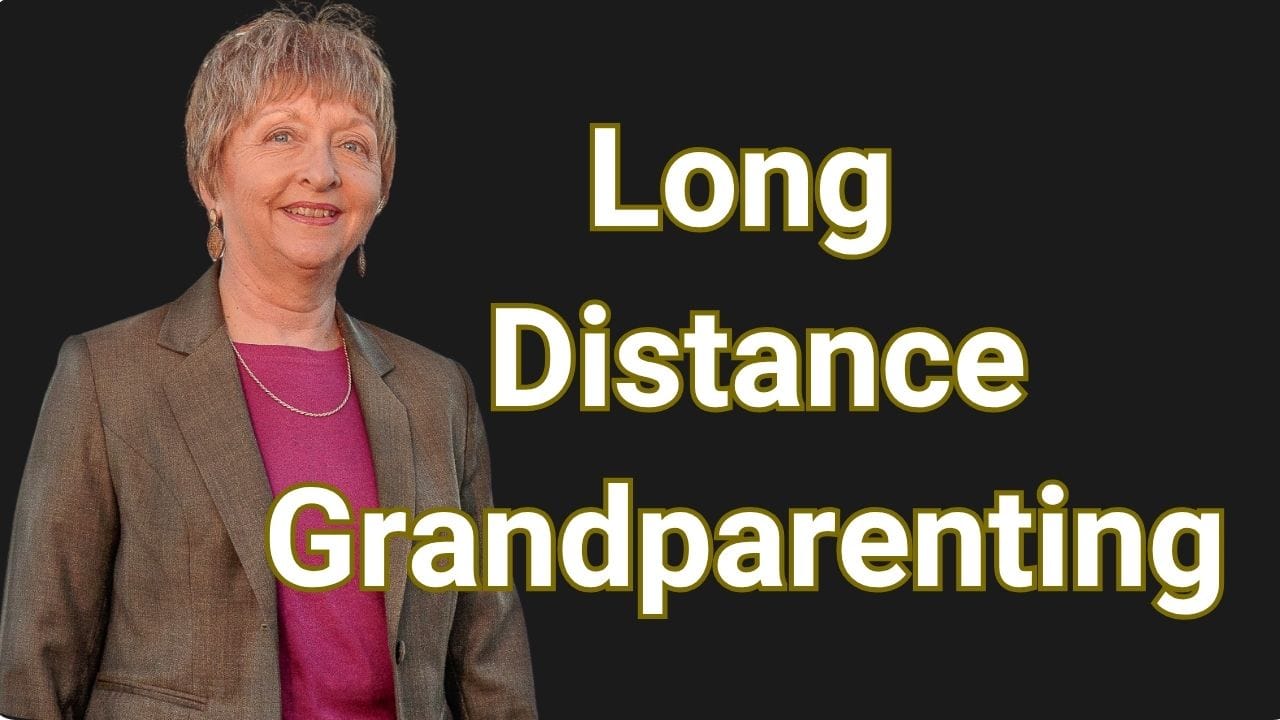
HELEN ELLIS. (00:00)
this is a key thing is that each generation knows how it is for them, but they don't necessarily spend a lot of time thinking how it is for the other. we know as the grandparents and parents back home, how life is for us, having our children around the world.
And you know how it is as an expat or a migrant living that world. But how often do we kind of think about how it is for each other? And that's what led me to wanting to write the three books
House Of Peregrine (00:55)
Welcome back to the House of Peregrine podcast. Today's conversation is for anyone who's ever tried to love well across time zones. When the people who matter most to you aren't just down the road, they're a full day of travel away. I'm really excited to welcome today Helen Ellis, MA, a New Zealand based researcher, author, and anthropologist, and the founder of DistanceFamilies.com. Helen isn't speaking about distance family life in theory, she's lived it for years.
Three of her four children and six of her seven grandchildren, aged two to 26, live between 16 and 30 flight hours away across the United States, England, and Scotland. Helen has written the Distance Families book series with titles for each generation, Being a Distance Grandparent, Being a Distance Son or Daughter, and Being a Distance Grandchild, which she just recently published. At the heart of her work is one connecting question. How is distance family going for you?
For our House of Peregrine community, people building lives across borders, this is such an important conversation and I'm really excited to have it today.
Thank you for coming on, Helen. I have been really looking forward to talking to you and so I'm really excited that we got to do this.
HELEN ELLIS. (02:06)
Thanks for inviting me. It's a pleasure to be here. I just love talking about intergenerational families separated by geography. It affects so many people.
House Of Peregrine (02:16)
It really does. in all, all walks of life. And so I wanted to start out by, mean, you've obviously written the book on this and it's actually not something that is often considered when we think of the adventure of moving to a new country, or maybe you go for work to a new country or these are, there's consequences, there's positives, there's negatives. And this is one that I feel like there's not a lot of consideration or
even wisdom passed down. And so I love what you're doing because it's not that it would change maybe what people would do, but maybe they could do it more thoughtfully or be more prepared for what that might be like. And so I want to start out by you telling, yeah, I want to start out by you telling us a little bit what your story is. Like, how do you know so much about this other than what I said in your bio?
HELEN ELLIS. (02:58)
That's absolutely right. ⁓
Well I guess it's because we have a really unusual family package. My husband and I, it's our second time married but we've been married over 30 years and we've each brought two children to our marriage but when we got married mine were three and four and his were 19 and 20 so we were a pretty odd looking family and my stepson
left home just after we were married and at the age of 21 and went to England and he's been there ever since. So I have grandchildren over there that are 23 and 26 and so that that was the first part and then my stepdaughter she went to Scotland and found herself a Scottish husband but she eventually came home and then my own children who came along in the second batch
One of them married an American, lived all over the world in different places with different work and is now based in Atlanta with two boys. And then my son, won a green card through the lottery system, which America has, which a lot of people don't know about. Lucky me, another one. he decided to settle in Chicago because of the type of music and arts world that he is.
House Of Peregrine (04:13)
No.
HELEN ELLIS. (04:21)
part of and he's married an American girl and they have a two-year-old so it's just how it's happened so we've been doing distance families for over 30 years and we've been doing distance grandparenting for 26 years so during some of that you know I still had teenagers at home and we had babies in England and it was pretty crazy so I have a really unusual package of circumstances which just means that
House Of Peregrine (04:44)
well.
HELEN ELLIS. (04:51)
I've done it with baby grandkids and, you know, elementary school grandkids and teenagers and now, you know, GNZ. So most people sometimes they're waiting till the 70s before they get a grandchild. Well, I got there at 40s. So it was a really interesting package.
House Of Peregrine (05:08)
Wow. to be clear for our audience,
yeah, and to be clear for your audience, you're in New Zealand. Yeah.
HELEN ELLIS. (05:15)
I'm in New Zealand, yes, we're at the bottom of the
world, so last bus stop in the world.
House Of Peregrine (05:20)
And so that's, I always tell people that's like, it's not true, but my sister almost moved to Australia and we had friends move to New Zealand and I always say, that's like moving to another planet. It's really far. Not in the sense that it's so different, but it's so, it seems so much farther than just say, hopping to another state, which is all distance, but you're doing it, I would say in a very like, you're doing it to the max with the maximum amount of space. Yeah.
HELEN ELLIS. (05:20)
But
We're doing to the max. And
the other thing is that when you're in New Zealand, you've got every different.
barrier and boundary thrown at you because you're in the southern hemisphere and you're often working with timetables of the northern hemisphere, the school holidays, we've got different seasons, we're right next door to the international date line, so if your family's in America, it's always on a different day of the week, we have daylight saving, we're in a time zone all by ourselves down here, so every single distance grandchild is in another time zone, we've got the lot.
The only thing that we've got which I really appreciate is that all my kids live somewhere where they speak English. So I'm really grateful for that.
House Of Peregrine (06:18)
Yeah, you do.
Yeah, yeah. And so that wasn't something that you started in your family. It just kind of happened for your kids. And so you don't have a history of that. So sometimes this is like a generational thing, like even in my family, because I moved away, I was like, now my kids are going to be able to move away. But for you, sounds like this just kind of unfolded.
HELEN ELLIS. (06:32)
It just happened.
Well, yeah.
Well, that is true, but we as a nation, we are people that like to explore and it's simply because we're so far away. We just can't understand why, you know, people in England, for example, aren't visiting Europe every weekend. I mean, why wouldn't you? It's just on your doorstep. It just doesn't make sense to us. So when you are so far away, you really appreciate what's a long way away and
young people, was like it myself, had a what a rite of passage. We used to call it the OE, the overseas experience. And we'd end up packing ourselves off going to London and working at a pub and, you know, having a great time. So and also I've had many years in the travel industry. So I have to admit that there's sort of a few travel genes there. So that probably inspired my genetic kids, but my non genetic kids still grabbed it anyway. yeah.
So when you are as far away as we are, then everything seems far more exciting and we just accept that jet lag and long flights are just part of the deal.
House Of Peregrine (07:49)
Wow, well that's incredible and yeah, something I hadn't considered really. So when it seems like you've been doing this a long time and you are just gathering all this wisdom, what was the time when you really decided to make, like was there a moment or was there something that happened with your own children that made it so you started writing these books? what brought this about?
these beautiful books you've written.
HELEN ELLIS. (08:12)
Well, we had lived it for a long time and I hadn't sort of thought a lot about it. We seemed to be the only ones doing or not a lot of people doing it as crazily as we were. But then as an older person, I took myself off to university. I had not gone to university when I left school. It wasn't kind of the norm. just leave school, got a job and that's exactly what I did. But all my kids had degrees and I thought I'm sure I could manage to do one of those. So in my 50s, I took myself off to university and did a Bachelor of Arts part time.
and one of the last papers that I had to do was learning how to do a research proposal. So my professor said to me, okay Helen if you were to do your masters what would you do it on? And I'm going, no idea, can't wait to get out of here, you know taking years and years part-time, but I had to come up with something. So I was majoring in anthropology that was sort of learning about the other, learning about different societies, how
societies connect with other societies and I thought well distance families are kind of societies and how do these different generations connect so I decided to do my research proposal on that but in the process I had to do you know research how much was out there and what people written about it next to nothing next to nothing so in a country where 20 percent of New Zealanders who were born here
now live overseas, would you believe that not one single academic has ever written on the subject of family separated by geography? Not one. So then I looked around the world and I thought well what's been written out there in the mainstream world? Next to nothing. And I thought this is is crazy. There's you know we had lived so much of it at that point.
House Of Peregrine (09:43)
Wow.
thing.
HELEN ELLIS. (09:58)
And it just seemed completely and utterly ridiculous that there wasn't something out there. So I decided to do my masters so I could get the sort of researching thing under my belt and maybe get some letters after my name so I looked a little bit, you know, I wasn't the granny from New Zealand. And then I thought, okay, I'll do my masters because it needs to be done. Someone needs to, you know, fly the flag here.
And then it wasn't long before I realized that the mainstream book series needed to be written. And when I realized through living it and doing some initial research, I realized that this is a key thing is that each generation knows how it is for them, but they don't necessarily spend a lot of time thinking how it is for the other. So we know as the grandparents and parents back home, how life is for us, having our children around the world.
And you know how it is as an expat or a migrant living that world. But how often do we kind of think about how it is for each other? And that's what led me to wanting to write the three books and wanting to have a subtitle that says for each of them a book for all generations, because I wanted to encourage each generation to just spend a little bit more time.
thinking about how it is for the other generations. Because with that, that builds empathy and empathy helps relationships thrive across the miles. So that's how it happened. Yeah, crazy idea.
House Of Peregrine (11:19)
Yeah.
That's incredible. I know
it's not crazy. It's a we call a gap in the market. You discovered a gap in the market.
HELEN ELLIS. (11:36)
Well, there was a gap. There was a gap in the market.
And I never I'm not I'm not a writer. I'm not someone who says, I love writing. I don't have masses of journal books. I'm just not like that at all. I'm just this job needs to be done. I'm a doer. So yeah, so I just taught myself how to do it. And yeah, and did it yeah.
House Of Peregrine (11:50)
Yeah, that's amazing.
Yeah. And I know
in my own journey, I really appreciate this and I'll probably buy these books for myself and my mom and dad. And because what I what I've noticed is it can feel like you're the only one doing it, like you said. And I mean, there's a lot of feelings that go into it. And, you know, I've spent a lot of time thinking about this for my own parents, because we left with three tiny grandkids that they thought they would be around for their whole lives. That's my heritage.
And so, and we left for a year or two and then it's turned into 10. And so I've often thought about how that must, there must be a lot of feeling. My parents always say how they're proud of me. They know why I moved, but also there's this little bit of, there's normal feelings, like maybe a little bit of betrayal, maybe a little bit of, you know, a lot of loss, right? Things gained, but also a lot of loss. And it occurs to me and I've always,
HELEN ELLIS. (12:44)
Mm-hmm
House Of Peregrine (12:49)
tried to be forward about, know, we gain a lot and we lose a lot. And so making those, it's not about quantity, it's about quality is what we always say in our family. And it occurs to me that these kind of books and increasing that empathy and being able to meet or have these discussions together would increase the quality because you're not having those moments of hurt. I always say you have to do a lot of fighting and a lot of loving in the amount of time you're together. And so it occurs to me that maybe those fights
HELEN ELLIS. (13:14)
Yep.
House Of Peregrine (13:16)
fights, know, or those hard feelings can be a little bit more productive if you have maybe a little bit of wisdom like these books provide.
HELEN ELLIS. (13:17)
Mm-hmm.
That's
you're absolutely right, because when you do get together, time is really limited and you don't necessarily get those opportunities to have those deep conversations because you're coming and you're going and there's kids there and and you know, there's always lots of people and there's so much that goes unsaid. And so that's what I'm trying to do is fill that void of what's unsaid to just make the waters a little bit smoother. Yeah.
House Of Peregrine (13:51)
Yeah. And, you know, wisdom keepers of this type of life, we always say, I always say with House of Peregrine, right, like, you don't need to reinvent the wheel. You don't need to have this. If you know that there's other grandparents going through this and this is a normal process of like kind of being mad at your kid for leaving, but also being super proud of them or, you know, you know, there's a normal process that probably goes on that you don't have to feel so alone in and just kind of know it's normal and.
HELEN ELLIS. (14:09)
Yeah.
House Of Peregrine (14:19)
of the life you're living. I really love that and it seems like that's a little bit of what's driven you is that connection. Yeah.
HELEN ELLIS. (14:23)
That's exactly right. Yes.
even if, you know, I put lots of hints and tips and that sort of thing, but even if someone reads one of my books and at the end of it, they just don't feel as alone and they feel that their feelings are quite normal because the feelings change. mean, quite honestly, you know, when the family come and visit and the house has been chaotic and, you know,
Sometimes we come home from the airport and say, well, that's nice. You know, we are OK now. It's it's OK to say, yeah, it's right. So it doesn't have to be, you know, perfect, perfect families all the time. But if you get to speak to somebody who's in a similar sort of situation, then you just feel a little bit more normal. Because for many of us, as it would be, you know,
House Of Peregrine (14:52)
Yeah, you feel satisfied. Yeah.
HELEN ELLIS. (15:13)
because your family's not visiting you and seeing your friends all the time. There are part of you that's not really visible. There might be some photos on the mantelpiece, but your friends don't pop around and find your mums there having a cup of coffee. And it's the same for me. You I live in apartment building and some of them here have, you know, grandchildren come and, you know, they're up and down the hall or whatever. I see their kids, but they don't see mine. So I've got them.
just not here so it's sort of like an invisible part of your being that the rest of your world doesn't see and they kind of forget you've got them you know yeah
House Of Peregrine (15:41)
Yeah.
Mm-hmm.
Yeah. You're like, no,
I'm a grandma. They're just not here. Yeah. And I think that that's so beautifully put that those different sections of you, different roles or different relationships you have aren't as visible. They're different. ⁓ And you're doing it differently. And I've came to your work really through a lot of your LinkedIn posts that were super inspiring to me. ⁓ One of them, I believe, was
HELEN ELLIS. (15:54)
haha
Yes.
Thank you.
House Of Peregrine (16:15)
I think I get this right, but I hope you'll correct me if I'm wrong. It was something with a provocative title like, don't know that I wanna be a full-time grandma or something like this, or like there's advantages. And I loved it, not because it's provocative, but it provides this kind of an interruption to this, I wanna be around my grandkids 24 seven and da da, which is an option and such a beautiful one.
HELEN ELLIS. (16:27)
Yeah. yes. Yes, I know that. Yeah. mean.
House Of Peregrine (16:43)
But that's not always how people want to spend their years is completely surrounded by family. So I love the perspective that you offer that there are your hearts breaking sometimes, but also your life is different and maybe ways that are also beneficial. And so I loved that perspective as a woman, as a daughter, as everything. So maybe talk us through that a little bit. And again, I want to say upfront, because we have to for some reason, to women talking about this, it doesn't mean you don't love your children.
HELEN ELLIS. (16:45)
Hi.
Exactly. mean quite honestly
there's no way that I would have written this book series if you know we'd had grandkids down the road. know that. So we have been able to create another life quite happily and I'm proud of that and my kids are proud of that you know that what I've done and their involvement is because they sort of feature a little bit here and there so I think it's important and you could even feel sort of guilty you know I don't feel guilty.
House Of Peregrine (17:18)
Yep.
HELEN ELLIS. (17:37)
I love the fact that I have every Saturday night to myself and nobody's going to ask me to babysit. I mean, great. And I look at other grandmothers around and these days, you know, there's a lot of pressure. know, things have changed over the decades with different generations. And now, you know, there's quite a big pressure on grandmothers to babysit their grandchildren because daycare is expensive. And I'm sure that when
House Of Peregrine (17:45)
Yeah.
HELEN ELLIS. (18:04)
those mothers with those young ones get together with their friends who've also got little ones. I'm sure one of the topic of conversation is how many days does your mother look after the children, you know, and there must be some comparing and there are some mothers, grandmothers who just can't wait to say, I'll do Monday, Tuesday, you know, I can't wait. And others are going, I don't know about that. I've worked hard. I'd like to do something else with my time. So.
House Of Peregrine (18:22)
Yep. Yep.
Yeah.
HELEN ELLIS. (18:31)
We're not all the same people and so we don't relate, we don't react in the same way. So there are some distance grandmothers who pine, have been pining for years and will never stop pining. Well others kind of make the most of it and you know we have to plan to be independent you know in our latter years and
financially and in practical terms, prepare for the fact that you may not have anyone here to give you a hand and that's uppermost and you know for us but I think we can all make a great life and I don't have any regrets at all. I would never want to just flip my life upside down and have them all down the road. going maybe not. You know they have their lives.
bought houses and they've made friends. And now when they visit New Zealand, they love New Zealand for the scenery and the feeling at home with their language. you know, people just get them straight away. know, our humor, our colloquial terms and phrases. And so as soon as they get to a departure lounge and they hear New Zealand accents, they
They feel at home as you probably do when you get to the States or land in Salt Lake City, you have this moment. But their home is where they live. I understand that. And I can't expect them to pack everything up and just come here. Yeah.
House Of Peregrine (19:54)
Yeah. Yeah.
Yeah, you've said about 40 amazing things in that little thing that we could take any direction. ⁓ But one I want to really maybe focus on for a second is this planning that's different. You're planning different for your life and the care work that is still socially accepted and in the economy expected by women. I don't know if you know, I did a TED talk about this, about the economy of women and
HELEN ELLIS. (20:05)
you
You
House Of Peregrine (20:26)
Yeah, was the economy really does run on this. And as you said, sometimes daughters and sons expect the grandmothers to care for them in exchange for care later in life, which is beautiful if that works for everybody. It's really beautiful. But when your kids have made their lives away in a country far away and very far away in your case, how does that change the equation for you? What are you doing to prepare?
HELEN ELLIS. (20:33)
Yes.
House Of Peregrine (20:51)
for not having their kids close at home, which may seem like a hard question, but I think it's a really important one.
HELEN ELLIS. (20:57)
I think it's a really important one and well first of all I tell my I tell my distance grandparents friends you know don't be so generous with the bank of mum and dad right because you may need it later on. We have a business here called Driving Miss Daisy and it's a like a taxi service for older people who maybe need a little bit more help getting in and out of the car and
being taken to appointments and in fact, yes, exactly. Yeah, so it's named after that. But the main role is collecting older people, taking them to appointments, to hospital, that sort of thing. And so I just say, look, don't give too much away. It can be precious because driving with Miss Daisy may be your best friend later on and it's expensive.
House Of Peregrine (21:27)
It's an old movie, right? Driving Miss Daisy is an old movie, I remember. Yeah, yeah.
HELEN ELLIS. (21:52)
you know, it's expensive to have those sorts of services. So I think we've definitely, I mean, my husband's older than me, so I know that, you know, I'm more than likely going to be by myself by myself. So we made a decision only, I suppose it was about this time a couple of years ago, I was in trying to get this last book out and wasn't really happening. And one of the reasons was that I needed two new hips. So I
We had a typical four bedroom house with a garden and everything. was low maintenance, but you know, I love my garden. And when I'm because I was married to someone that was older, but still fit and healthy and doing very well, but he's still older. And then here I am with two hips, not as able. And it just came. I just decided one day, said, that's it. We've got to move to the next step before we need to be at the next step. So we looked around and decided to move into an apartment. It's only
minutes from where we used to live. We have a lovely view out to the water. We're very blessed. It's lovely. Took a big risk, bought an apartment off a plan. So my husband's was sort of dragged, know, but he most of the moves he's been dragged, but he always agrees it's a good idea when we get there. And so we, you know, took a big risk financially as well and moved into an apartment. And we are so happy we've made that decision. And we've also, here's another thing we've done.
House Of Peregrine (23:06)
Ha
HELEN ELLIS. (23:18)
It's three bedrooms and we have converted the two spare bedrooms into an office each for us because he still works and I still work. And because we figured that for 50 weeks of the year, we're the only ones here and then maybe someone will come and visit. That's great. We'll have a big shuffle around and we'll get some beds and we'll make it happen. And that's what we've done. And so for 50 weeks of the year, we have our own little room. This is mine.
And I love it. I haven't had my own room since I lived at home when I was 19 years of age. I love this. So these are things we've done. We would never have done that if we had grandkids down the road because we'd still be babysitting here and there and having them come over. And so, yeah, so we've made those sorts of decisions, you know, and we've made decisions about when we do travel.
You know, we've spent plenty of time at the back of the plane, but we're now premium economy people on the long haul flights. And that's it. Yeah. If we can't do that, we might not go. Yeah. ⁓
House Of Peregrine (24:14)
Yeah, that makes sense. so
your prior, it sounds like you've shifted your life to reflect the reality and have just learned to enjoy it and or actually it might be preferred. Like you're not, you've maybe done the lost work and now if there was any, maybe. And that's really, really beautiful instead of what I think has happened sometimes with my friends is their parents will keep this dream alive of the big house and the
HELEN ELLIS. (24:25)
Peace!
Peace.
House Of Peregrine (24:42)
their kids all coming home and that's beautiful dream, but it's not always the reality. And so I love that you've taken a look at the reality and really leaned into it for yourself because I think everywhere, whether you're distance parenting or not, kids just want their parents to thrive. And that's, yeah.
HELEN ELLIS. (25:01)
Yes, that's right. They do.
They do. we have a very big business in New Zealand of retirement villages. So these are, you know, active retirees and it's a huge business and there's loads of them. And they have a high proportion of distance grandparents living there because we have such a high proportion in our population. Remembering 20 % of people were born here and now live overseas. We're up there with the Irish. I tell you, we're everywhere.
House Of Peregrine (25:22)
Yeah, 20%, yeah.
HELEN ELLIS. (25:28)
So you know there's a lot of us around and you don't want that big house. You know it's really tricky to be getting on ladders and doing things. It's not a good idea. Yeah.
House Of Peregrine (25:38)
Yeah, keep, it's not a good idea, yeah. And
so that brings me to my next question from what you were saying, which is what is the biggest thing that you wish that kids, so adult children of their parents who have been left in the country they grew up, what is your biggest bit of advice or empathy you would love people to get from your work?
Like for me and my parents, what do you want me to know?
HELEN ELLIS. (26:04)
Yeah.
Well, sometimes the bigger things and sometimes there's little things. And I think the bigger things are, you know, be happy to be a communication traffic officer. So you're the ones with the kids, you're the ones with busy coming goings, you know, loads and loads of activities. And often the parents, grandparents back home don't want to keep interrupting you or ringing at the wrong time.
and they feel a sense of responsibility. They want to grandparent but they want don't want to ring at the wrong time and that sort of thing. So embrace the role of the communication traffic officer and be the booker. So book things you know. I always say look you can book it you can always cancel it but book it you know and I've noticed
that families get into a rhythm. Have a rhythm of how you communicate so that it works for all parties and often it's a Sunday night, Sunday morning, those sorts of let's have a catch up. So be happy to be the booker Work it out as a couple. Maybe one looks after one side and one looks after the other or if you're the wife and you've got both of them just you know.
That's what often happens, it's what I do. I'm the booker and the communicator of my side and my husband's side of the family because I just figure, I'll get it done. So we work as a team, you know, in our marriages, lots of other things that my husband does, but that's something I can do. Get on the phone, sort it out, invite them over for dinner, whatever. I'm the booker.
House Of Peregrine (27:31)
Someone's gotta do it. Yeah. Yeah.
Yeah.
HELEN ELLIS. (27:46)
So embrace that. But there's also some tiny little things that I like to share with people that when I tell the expat migrant generation, they look at me as if you have to be joking. So there are little things like over and over and over again, I get told by the distance parents and distance grandparents, they never say thank you.
House Of Peregrine (28:10)
Hmm. Really? Thank you for...
HELEN ELLIS. (28:11)
all the time. It is a consistent
message. I didn't get a thank you for the present, I didn't get a thank you for this, I sent the card, I hope it got there, no one said thank you, they opened the present when we weren't on the video call, I don't know if they like it, nobody ever says thank you. So it is a prolific... yeah!
House Of Peregrine (28:31)
that's so true because you're out of sync. Yeah,
that makes sense.
HELEN ELLIS. (28:36)
It's a prolific
message. sometimes when you're at home and you're thinking, I know for myself, I'll tell you a story. My daughter lives in Atlanta. I was there once when it was her birthday, which also happens to coincide with Mother's Day and she's a single parent. So it's not a great time because the kids, the boys don't do it. Little boys don't do anything for Mother's Day, but that's another whole story. But anyway, we happen to be there for her birthday.
And we were able to bring more presents. You know we'd often send trinkets, but you know, the postage is just completely crazy. And she'd often, we'd send her a voucher for a massage or something else. But we sat down at the table and she opened some presents and some of them were bit bulkier than normal. And she was in tears. said, oh, mum, you have no idea how special it is to actually open something, you know, open a present from home, a proper present with
paper and a ribbon and all that. She said it's just so lovely. So you put a lot of thought into the presents and you go, should I get the blue one or the green one or whatever? And then you get no feedback and it would be nice. And the other thing, now you're really, everyone rolls their eyes at this one. They never make their bed.
House Of Peregrine (29:46)
Yeah, that's a huge one.
HELEN ELLIS. (29:55)
Right, so everyone comes to town. The parents and grandparents know it's going to be chaos. They know that the house is going to be a mad place and they know there'll be stuff everywhere and the noise level will go up and there'll be lots of catering, lots of food in the refrigerator. But they're used to walking past those spare bedrooms and the beds are made for 50 weeks of the year. They might not get in there and dusted every week. I can assure you I don't when I had spare bedrooms.
But you know, the bed's neat and tidy. And now every time they walk past it, it's a bomb site and the bed's never made all day. Now they'll never tell you that. So I'm telling you, because these are the little things that drive them batty. know, can they just hang their towels up? Yeah.
House Of Peregrine (30:31)
Well, yeah. Yeah.
Yeah.
Yep, yep.
it's back to the empathy and respect thing and making the most of your time. These little irritations can add up to disconnection and a time where you really want to be utilizing that time for connection and heritage and just having those rites of passage. Tell me, I'm really into, oh sorry, is there any more? Tell me more, but I have so many questions.
HELEN ELLIS. (30:57)
Peace.
Yes.
That's enough.
The only other one I would say is that if you have been brought up with a faith and if you have gone to church as a family and if you come home and your folks are still going to church and you don't feel completely out of place there, go with them and go early.
House Of Peregrine (31:10)
Yeah, no, no, those are great ones. And you know, it, yeah, yeah.
HELEN ELLIS. (31:33)
Don't walk in 30 seconds before the service begins because there are lots of people who know that you've just arrived and they knew you when you were children and they would like to say hello and don't rush off afterwards. And many of them are praying for you.
House Of Peregrine (31:41)
Yeah.
HELEN ELLIS. (31:51)
Yeah. So that is something that gives huge joy to your parents. A little thing. And maybe it's not church. Maybe it's the country club or maybe it's, you know, the rugby club or something else, but somewhere that you that there are a lot of people that know you and care about you. And every time your parents come out from church on a Sunday morning, their friends will say,
House Of Peregrine (32:13)
Yeah.
HELEN ELLIS. (32:19)
How so-and-so in wherever, know, you're being asked about all the time by people who have known you Yeah.
House Of Peregrine (32:26)
Yeah,
forever. I always say to my kids, I made you and I wanna show you off, because you're gorgeous. You're one of my most proud moments. Can I just show you off a little bit? And so that's my perspective, but your perspective is so beautiful that there are people who are asking about you from across the world. Go see them, go tell them how you are. Yeah.
HELEN ELLIS. (32:34)
Yeah.
Yeah.
and they are praying for you because they tell yeah
I have friends you know who say I'm praying for so and so yeah. ⁓
House Of Peregrine (32:56)
wow, that's beautiful.
It's beautiful. And the same in reverse. My family has had a few things since we've lived abroad and my family, when my parents come to visit or my sister, my friends are all like, yes, I know. How was that trip you took or that hospital stay you had? I mean, we were all thinking of you and it's just to bridge those little things. It's not about anything else. And you can forget those things, especially when you're jet lagged and kids and schedules and yeah. So this beautiful suggestions, beautiful suggestions.
HELEN ELLIS. (33:09)
Yeah.
Hmm.
differently. Yes.
House Of Peregrine (33:24)
And I'm curious also, and maybe this is in your book that I maybe I'm asking a question you've already answered, but I love to find rituals that we can do with the grandparents or things. I'm always trying to come up with things that we can do to keep that connection physical if possible. And as you were talking, we were talking before we started, like my family just had an immense loss of my niece who's three.
HELEN ELLIS. (33:32)
Mm-hmm.
House Of Peregrine (33:50)
And we, this last week has been all about figuring out how I can be present there without being physically present and how I can make a ceremony for their family. so I ended up buying things for our family and their family and then to bury with her. so I just wish, I'm curious if you have some, not maybe as extreme as maybe a death, but little things or little Sarah, besides the calls, which sound like beautiful tradition you have.
HELEN ELLIS. (34:11)
Mm.
Mm.
House Of Peregrine (34:18)
Are there other hints or physical things that you have that people can maybe do to have something to hold onto or that work in your life?
HELEN ELLIS. (34:27)
Yes, well
I think first of all separate from all sorts of memento kind of things is the written word. Children these days never get mail. I mean you know I grew up, my husband when he was leaving high school he got a job as what we call a postie you know he was on a bicycle delivering the mail and in those days you would have
House Of Peregrine (34:37)
Yep.
HELEN ELLIS. (34:50)
know one posty but at Christmas time you'd have another one for all the Christmas cards. So I grew up with strings you know of Christmas cards now of course they've all gone out the door you know and maybe not so much in America because you're kind of different about stuff like that but I can tell you if I got two Christmas cards now that would be a lot I mean I just don't get them these days but the written word is so valuable and
House Of Peregrine (34:55)
Hmm.
So did I. Yeah.
HELEN ELLIS. (35:18)
If you if the grandparents send messages, little cards, postcards or whatever to their grandkids, you can be pretty sure they don't throw them out. You stash them away somewhere because I know they've told me they've got them. Adults have still got things that they were sent as children and vice versa. If you if somebody sends the written word to the grandparents back home, I always say send it really early. Don't worry about.
definitely don't have that birthday card late, but send it early so it can sit on the counter for a few days and show it off sort of thing. So they've written where I have a stash just on the shelves over here behind me. I've got a little tin and then some postcards and there's all sorts of little trinkets that have come from my grandkids and my family from overseas. And there's a handkerchief that my daughter-in-law from Chicago sent to me.
Because when they got married, was during COVID, and we had a ceremony here, a live telecast ceremony in New Zealand, and they had the ceremony there. The Saturday night, our Sunday morning, was completely crazy, but it worked. She sent me this beautiful handkerchief, and she said, this is for the tears. So I could not get rid of that. I mean, I've still got that handkerchief. She said, oh, you know, there'll be some tears, so this is for the tears. yeah, so those.
House Of Peregrine (36:28)
yeah.
HELEN ELLIS. (36:38)
you know the written word those those little things are fantastic but the other things kind of evolve and let me give you a few In New Zealand we have an English heritage you know my dad was born in London a lot of the immigrants in New Zealand came from the United Kingdom so we we're more kind of English than we are sort of say American or Canadian you know in our thinking and with that goes the foods so
Fruitcake like a we call a Christmas cake a fruitcake that is something that has become a real currency of my distance grandparenting I have two little southern boys from Atlanta who love English fruitcake and they'll do anything for my fruitcake it will go back and Tupperware containers and planes when somebody's coming down and they come down and we make it and
They just love my fruitcake. And you can also have what we call fruit mince pies. They're very English things, pasty with the fruit mince in them, When they came last time, it was February and you could buy them at the supermarket as well. And the supermarket was getting rid of all their Christmas stock. And I stood there in the supermarket and I go, hmm, why gave them three a day?
and they're here for two weeks and then the adults will want one. And I did all these calculations on my phone. I walked out with a trolley. I have to say a trolley of these things. When those boys heard that Nanma, that's my name, had stashed all those dozens of fruit mince pies somewhere in our apartment, they were just beside themselves. you know, things like that are just amazing. When we go to England, our grandkids are over there. They are very sporty and very competitive.
House Of Peregrine (38:12)
Yep.
HELEN ELLIS. (38:21)
and we started you know one thing that was easy to do when they were little was play mini golf do you call it mini golf or putt putting golf you know that yeah mini golf okay so we'd play mini golf but my husband's a golfer and he would always win and they would be always annoyed so he would always win and then he'd always buy everyone an ice cream and then two or three days later we would always have to go and back to mini golf let's try and beat grandad no grandad still wins buy the ice creams
House Of Peregrine (38:28)
Yeah, mini golf,
HELEN ELLIS. (38:50)
and will kind of accept it. And that is every trip. Every trip we play mini golf, buy ice cream, buy, you know, it's the same thing. So when my grandson came out when he was about 20 on a gap year, and we took him on a little holiday, a little vacation, and we went to somewhere and there was some, really lovely mini golf. And we just looked at each other as if, well, better do that. So we were in there playing mini golf. Granddad won, buy the ice creams. And
You know, it doesn't have to be like big things. They're one and truly cemented in our families. So it might be the food things. It might be a ritual at Christmas. It might be something that you give each other every birthday or Mother's Day. It might be a song that you sing or a game that you play online. It's just, it's not like huge and big. It's just a little, but you do it.
every time. Yeah. It's work for us.
House Of Peregrine (39:49)
Yeah. And that's,
yeah, that's amazing. so tell us I want now to give you some of your pro. What are some like being a distance grandma or grandpa is not you have different tricks up your sleeve. Like you said, the pies and the things, but like, there just it sounds like the advice is just do something like keep that connection going in whatever way works for you.
HELEN ELLIS. (40:11)
Yeah.
House Of Peregrine (40:14)
Just because they're not near you doesn't mean that you're not needed or important or so you have to. mean, in your case, especially in my family's case, no one did this before them. All of their grandkids live down the street from my parents point of view. And so these are new. You've got to get new tricks and tips and you guys. And so that sounds like don't let go. Don't become silent. Keep that connection going.
HELEN ELLIS. (40:33)
Yes.
Just keep doing whatever you can, you know? I mean, some people, some grandmothers are crafty, you know, and they'll make little finger puppets or something. I am hopeless at anything like that. I'm just not there, you know? It's not my thing, but others will be able to play, you know, there are games you can play online or you can read books to them. You can buy, you know, we have some really famous New Zealand children's books. So get two copies of them. Give one to your daughter and son.
House Of Peregrine (40:44)
Yeah.
HELEN ELLIS. (41:08)
wherever they live, you have one and you can read it and read it on the screen. And I've done that once. My daughter was trying to potty train the little one, one of the boys, and he was sitting out on the deck on the potty. And I said, look, I'll read about books. I started reading about books. And she said, look, I'll be back in a second, you know, rushing to the bathroom or something. Well, by the time he'd come back, she'd come back.
You've done it. So you know, come up with something and but then the next thing you're changing and it's something different again now. So, you know, you can't get set and this is what we do. And then you also have to be prepared. tell the grandparents, look, sometimes, you know, your daughter will say, do you want to talk to Nana? Do you want to talk to granddad? No.
House Of Peregrine (41:45)
Yeah.
⁓
HELEN ELLIS. (41:58)
No.
But, you know, grandkids who live down the road do the same thing. They come for lunch on Sunday. They don't want to be there. They wanted to be somewhere else. They sit in a corner and they're grumpy. Come into the table. No. So we can't get too, you know, upset about anything. You've really got to go with the flow a little bit more and be chilled about.
House Of Peregrine (42:12)
Yep. Yeah.
HELEN ELLIS. (42:25)
what happens, you you might have this really important call box, it's a birthday or whatever, but the kids are grumpy and the phone's ringing and the doorbell goes and another time. Yeah.
House Of Peregrine (42:36)
Yep, another time.
And that's that empathy piece you're thinking about all the time. And because there is a certain way you may have imagined your grandparenting journey to be, and this may put a huge old wrench in it. But don't stop trying. Don't stop. Because grandparents are, from all the research we know, whether far or near, grandparents are essential. And that's not to babysit. That is not the point. It's heritage.
It's knowing ourselves better. It's for my kids, and you mentioned this earlier, I asked them to write letters, my parents one year, this was maybe when they were five or six or seven maybe. And my son's now 15 almost, and I just found the letter in his bed. Like he keeps it that close to him. And my parents are not letter writers, so that was not like something they would have come up with, but.
HELEN ELLIS. (43:12)
Fentus.
Yes.
House Of Peregrine (43:28)
I just thought, wow, what a massive impact that piece of paper had on that little boy. And so that is important. And my husband's father, my father-in-law, he has played chess with them over the years. that, I mean, my son won a chess competition a few years ago. those are impacts that are real. ⁓ of course, everything is real, but like,
HELEN ELLIS. (43:33)
Yeah.
yes. yes.
House Of Peregrine (43:51)
I just think I have seen in action how important grandparents are even a 10 hour flight away. These are bonds. They're just bonds.
HELEN ELLIS. (43:58)
Yes, you're absolutely
right. Yeah, when I wrote the last book, The Being a Distance Grandchild, I interviewed distance grandchildren around the world and they all came from different circumstances and they were all of adult age at that point. They weren't little ones, but they could reflect back.
And that different circumstances of that being missionary children, the children of missionaries, and they've lived all over the place in some precarious places and gone to Ohio every summer to the farm, to their grandparents. Or then there's others who had married, like my own situation, all the kids have all married another person from another country and settled.
in one place and
when I interviewed some of them, I had stories that brought tears to my eyes and they there was one she lives in Canada, come her both her grandparents come from South Africa and the one of the grandmothers would come and put as many grandkids on her lap as she could when she visited.
and read Winnie the Pooh. But she would read it with the most beautiful lyrical voice and take them off to the forest and tigger and pooh bear and everybody, you know, it was just absolutely fantastic. fact, this woman even named one of her sons Robin. So that was the uncle of the girl that I interviewed. But the woman that I interviewed went on to become an audio book narrator.
Now, where did she get that from? It was her visiting grandmother from South Africa reading Winnie the Pooh in this beautiful lyrical voice and giving it so much expression that she went on to do that. And there were several stories like that. So these are people that have only visit for three or four, you know, two or three weeks every two or three years. But what an impact. Yeah.
House Of Peregrine (45:56)
It's an incredible
impact. And not having, mean, you're important. That's what I want all grandparents to know and not just for babysitting. That's not what we want you for. But yeah, it's incredible stuff. And what I can really tell from your work is that you are really offering something. Like you're really offering something the world needs. so I'm so.
HELEN ELLIS. (46:03)
Yeah.
there.
House Of Peregrine (46:22)
Like you said, it's a small population. It's actually a big population in New Zealand, but actually a small population worldwide that has this
And so what I really am so inspired by is that you found something that you feel passionate about. You're connecting people. these are books that are, these are tomes of wisdom is how I see it, that are missing, that will really improve people's lives because I think
Whether it's a shock or not, it's a small population around the world of people who have this experience, grandparents, grandchildren, even though it's a large population in New Zealand.
It's a small population of people around the world who actually have this experience and so these tomes of wisdom that you've created are actually really important knowledge that will make connections better, distance easier and this experience I think changes the world because when we feel connected especially as kids that really changes
how the world works one person at a time. So I think the work you're doing is important. I love seeing it on all your channels. And I'm gonna buy the books. I'm gonna buy the books for my grandparents in the US and I'll buy some for myself because I think it's just beautiful work you're doing. yeah. Are there any other final tips before I get you to share with everyone how to contact you, where to buy your books, all that stuff?
HELEN ELLIS. (47:36)
Well, just one thought with the book is that giving, say, for example, the being a distant grandparent to your parents, one of the most profoundly impactful things that you could do is actually read the book yourself and then give it to them and say, I've read this and I understand more how it is for you. Because that's the whole point, you know.
House Of Peregrine (48:03)
I can imagine that would be healing, healing slightly. Yeah.
HELEN ELLIS. (48:03)
When they read it, it's yeah, yeah. So I've read this. I understand.
I've got it. Yeah. It's a huge gift because if in reverse, if your parents were to read being a distant son or daughter and be kind of, whoa, I had no idea about this. And I mean, as an example, when I speak to a group of grandparents, distance grandparents, and I say to them, do you know?
that the strongest emotion that your kids feel is the guilt of the left behind family? They look at me as if, really?
wow, you know, I want to give that message. So that's why I say the books are for all generations. So, you know, you give them that book and put a little note in it, you know, that I've read this and I get it. And then maybe they might want to read the Being a Distant Son or Daughter, though it sounds like your folks are really, really understanding, but there's lots that we can learn about how how it is for the other.
House Of Peregrine (48:41)
Yeah.
Yeah. And also, yeah, and if you're thinking of moving abroad, which a lot of people, more people are these days, it's like, do it well. You know, there's a way you can do this in a connected way. there's these books would be a boon to that, think of doing it well, making it count, making it connective, if you can, because I think that's so true that that is that.
HELEN ELLIS. (49:09)
and have a deeper understanding.
Mm-hmm.
Yes,
House Of Peregrine (49:32)
has really been a big part of my journey is just really feeling that loss of leaving behind and nieces and nephews and traditions and rites of passage. These are all things that we have to, that are broken and that we have to rebuild and reimagine. And so I love the work you're doing. Do you ever do grandparent, like courses, like grandma kid abroad?
HELEN ELLIS. (49:36)
Yes.
Mm-hmm.
Mm-hmm.
I haven't really because I think there's so many variables and it depends on the stage of life and the different cultures and your personalities. You know there's just there's just some real basics I say to them look your job is to accept to get to a place of acceptance. You told them think big, dream big.
House Of Peregrine (50:01)
Yeah, of course.
HELEN ELLIS. (50:18)
You can do it. Well, that's exactly what they've done. It just happens to revolve another country. So get with the program. know, I can't quite say it like that, but you but that's, you know, that's it. You know, we, we inspired. So it's the big overall things, make sure that you're talking the right way, that you're not piling guilt on them. You know, that the way your language is and keep that for your friends. Don't do it on them.
House Of Peregrine (50:28)
Yeah.
HELEN ELLIS. (50:46)
and just keep trying and keep doing and you know just keep at it all the time and just do your best. we just honestly if you just become a booker do your best you know you can have I've met many many families where there's so many two or three or four children and the grandparents are back home and these these aren't just New Zealand they're all over the place and they have told me that the strongest and the best relationship they have with them with
The child is the one who lives the furthest away. And I've heard that many times. Many times. Yeah. All right. So it's because you're intentional. You keep at it. You do your best. Keep turning up. Accept the good days and the bad days. Yeah. Yeah. So when I sometimes I get these brand new about to be grandmothers.
House Of Peregrine (51:21)
I can imagine.
Yep.
HELEN ELLIS. (51:40)
and there's some baby about to be born on the other side of the world and they're naturally devastated and you know wanting to rush over as soon as they can and the new mother's going no no not too soon you know and but i say to them look and they and they're so worried that they're not going to have a relationship with this child i said you are going to have a relationship like trust me
House Of Peregrine (52:02)
whether you want to or not.
HELEN ELLIS. (52:04)
Yeah, yeah
exactly you know they don't remember anything from under three anyway so whatever happens now they're never going to remember it but you will just keep doing it every day or every week keep going keep turning up and I promise you you will have a relationship it'll be just different from the one you've got with your grandkids down the road but it'll be yeah absolutely.
House Of Peregrine (52:25)
Yeah, it's there.
This is such a beautiful conversation. I feel like I've just sat with so much wisdom from you and beauty. So thank you so much. How can people reach you and get your books?
HELEN ELLIS. (52:39)
Okay well my books are available on all the normal platforms so the Amazons and all those sorts of places of the world so there are the three titles Being A Distance Grandparent, Being A Distance Son or Daughter and Being A Distance Grandchild and they all have a paperback version and they all have an ebook version and I also happen to do an audio version of the grandparent book so and it's
House Of Peregrine (53:02)
nice.
HELEN ELLIS. (53:03)
narrated it and my son who was a broadcaster did the introduction so you'll hear him and so that's available through the normal audio places yes and my website is distance with a C distancefamilies.com and there I've got loads of free information I gather articles from everywhere and I think that's a goodie stick it on the website so if you're looking for
House Of Peregrine (53:15)
Amazing.
HELEN ELLIS. (53:29)
wisdom from experts, anything else I've written, you'll find it there. You'll find links for the books. You'll find my social media platforms. You'll find my story. And you know, I love hearing from anybody who's, you know, enjoys talking about things like this. you know, yeah, I love connecting with people as best as I can.
House Of Peregrine (53:50)
Well, you've definitely connected with our audience and I can imagine all the books that are going across oceans with little handwritten notes in them about this really making a difference. And so I I really enjoyed talking to you and I really, yeah, I hope people reach out if they're going through this, if they want some wisdom. We'll put everything in the show notes and how people can buy your books. And thank you so much for coming on Helen. It's been just a beautiful conversation. So thank you so much.
HELEN ELLIS. (54:01)
good.
It
has. Thank you. It just has been lovely because you've really touched on the, you know, some really important points and it's been a lovely conversation. Thank you for the opportunity. I appreciate it.
House Of Peregrine (54:18)
coming on.
Thank you. All right, everyone. Thank you so much for tuning into the House of Peregrine podcast. You can check out everything about this podcast and Helen on our website, houseofperegrine.com. And you can listen in next week as we talk about other important issues that we are facing in the international community. Have a good week.