
"In relationships that cross borders, geography carries emotional and relational weight.
Couples may meet in a third country. One partner may relocate. A career may determine the first move. Over time, the adopted country becomes shared territory and part of the couple’s identity.
But when external events disrupt stability, assumptions about permanence may require unexpected negotiation."
By Nina Aziz Justin for House of Peregrine
The Life You Did Not Expect to Love
For years, I believed Amsterdam was my place, not in a symbolic or aspirational sense, but in the grounded way that comes from daily repetition and accumulated relationship.
I am deeply in love with the life I built there.
I miss the romance of my 750-year-old neighborhood. The canals are truly beautiful, and on Sunday mornings I walk to my 8am yoga lesson at a school housed inside a monumental building, its old beams and tall windows holding the weight of history. The streets are almost empty at that hour, the water barely moving beneath familiar bridges. That walk has been my ritual for more than a decade. It marks the beginning of my week with continuity, breath, and a
sense of place that feels earned rather than accidental.
My life there was built slowly through repetition. The vitamin shop that sets aside what I need without being asked. The hairdresser who, over time, became a friend. Even my dental hygienist, whom I see only twice a year, feels woven into my inner circle. I know her horse’s name. She knows my daughter’s challenges with the attentiveness of extended family.
These details are not sentimental. They are structural.
They are how belonging embeds itself into ordinary life.
We were not planning to leave.
Then a pipe burst in our home. Water spread through floors, walls, and ceilings, disrupting both the physical structure of the house and the steadiness it provided. What began as a domestic emergency quickly expanded into a broader practical question about where and how we were living.

Much of my husband’s professional work is based in France, something that had long been manageable through travel and coordination. But when the house flooded and our routines fractured, what had previously felt balanced required reassessment.
We were not seeking reinvention.
We were responding to interruption.
This is how many cross-border couples find themselves reconsidering decisions they once believed were settled. Not because someone is dissatisfied, but because life has shifted the conditions under which the relationship operates.
 House of Peregrine
 Laser 3.14
When “Back” Means Different Things
In relationships that cross borders, geography carries emotional and relational weight.
Couples may meet in a third country. One partner may relocate. A career may determine the first move. Over time, the adopted country becomes shared territory and part of the couple’s identity.
But when external events disrupt stability, assumptions about permanence soften.

One partner may articulate a renewed pull toward origin: a desire to be closer to parents, to live fully in their native language, to move through daily life without the constant background effort of translation.
The other may feel equally grounded in the life constructed abroad, in friendships formed over years, in professional identity, in the independence and expansion that emerged in that specific geography.
One orientation leans toward restoration. The other toward preservation. Both are coherent responses to lived experience.
The tension does not arise from opposition, but from two legitimate forms of attachment existing at the same time.
When Disruption Clarifies
Relocation conversations rarely begin as philosophical debates. More often, they are triggered by events that destabilize what once felt stable.
A structural issue in a home.
A shift in work.
An aging parent.
A child entering a new developmental stage.
Disruption forces clarity. It raises questions that comfort once postponed.
Where do we recover most easily after stress?
Where is daily life sustainably supported?
Where does each partner feel most resourced?
Events do not create longing. They reveal priorities.
In this way, interruption can become a catalyst for deeper examination of what sustains the relationship over time.
 House of Peregrine
The Human Architecture of Home
Anthropology reminds us that culture is embodied through repetition. The cadence of conversation, the humour that requires no explanation, the landscape that feels legible without effort all contribute to how the self stabilises.
Neuroscience deepens this understanding. Familiar environments reduce cognitive load. Recognisable social cues regulate the nervous system. A first language carries emotional memory in ways that second languages often cannot replicate with equal immediacy.
Returning to a country of origin can therefore feel regulating at a physiological level. Remaining abroad can feel expansive and generative. Leaving a place where one has rooted deeply can feel destabilising even when the move is logical.
Within couples, these differing nervous system experiences can coexist. One partner may feel replenished by proximity to origin, while the other feels grounded by the life built elsewhere.
Neither response is irrational. Both reflect embodied history.
 House of Peregrine
The Trinity of Reconsideration
When couples revisit the question of place, three dimensions often surface.
Identity. Who have I become here, and how would that self translate elsewhere? Would a return represent continuity, contraction, or further evolution?
Years abroad transform us. Returning does not mean stepping back into a previous self. It means introducing a revised identity into an older landscape.
Power. Whose language dominates daily life? Whose professional network carries weight? Who becomes the outsider?
Geography shifts relational balance in subtle but meaningful ways.
Attachment. One partner may experience a genuine pull toward origin. The other may feel deeply attached to the life cultivated abroad.
Attachment is not resistance. It is care.
Reframe the Narrative
Relocation discussions are often framed in binary terms: stay or go, support or oppose, compromise or sacrifice.

But belonging does not function in binaries. It accumulates and layers over time. The more constructive question becomes how two forms of belonging can be acknowledged without positioning one as more valid than the other.
The Eight Pillars of Conscious Reconsideration
When circumstances interrupt the plan, structure is needed to protect the relationship.

Clarity
What is truly driving this reconsideration?
Honesty
What do you genuinely love about your current life?
Grief
What would each of you lose in either scenario?
Power Awareness
How would autonomy and fluency shift?
Time Framing
Is this permanent, experimental, or seasonal?
Community Mapping
Where are your networks strongest?
Child Perspective
Where do your children expand, and where do they struggle?
Relationship Priority
What must remain intact regardless of geography?
These pillars do not remove complexity. However, they create steadiness within our relationship.
Rituals for Couples in Transition
When identity feels unsettled, ritual introduces stability.

‘The Dual Future Exercise’ invites each partner to write two five-year narratives, one in each country, focusing on lived experience rather than financial outcome.
‘The Attachment Inventory’ requires listing five ordinary aspects of current life that would be missed, because daily details often reveal deeper loyalties.
‘The Reality Visit’ involves spending extended time in the potential country as the adults you are now, not as nostalgic versions of yourselves.
‘The Relationship Anchor’ consists of articulating three commitments that will remain unchanged regardless of location.
Slowing the process protects relational trust, particularly when change was not initiated by desire but by interruption.
Reconsidering Home
Living across borders alters the meaning of home. It ceases to be singular or territorially defined. It becomes plural and relational.
Sometimes couples initiate change. Sometimes change arrives uninvited and requires adaptation.
In my own life, I remain deeply attached to the life I built in Amsterdam. I also recognize the professional realities that connect our family to France. The flood did not dictate a move, but it required us to examine our assumptions.
There is no final declaration. Only an ongoing negotiation grounded in respect.
Belonging does not demand a single geography. It asks for maturity, mutual recognition, and the capacity to hold complexity without converting it into conflict.
The most important home a couple builds is not located on a map. It is the relational space in which both people feel acknowledged within the choice.
Reconsidering home is not a failure of certainty. It is an act of shared evolution.
And love, as I have discovered, like belonging, rarely lives in absolutes.

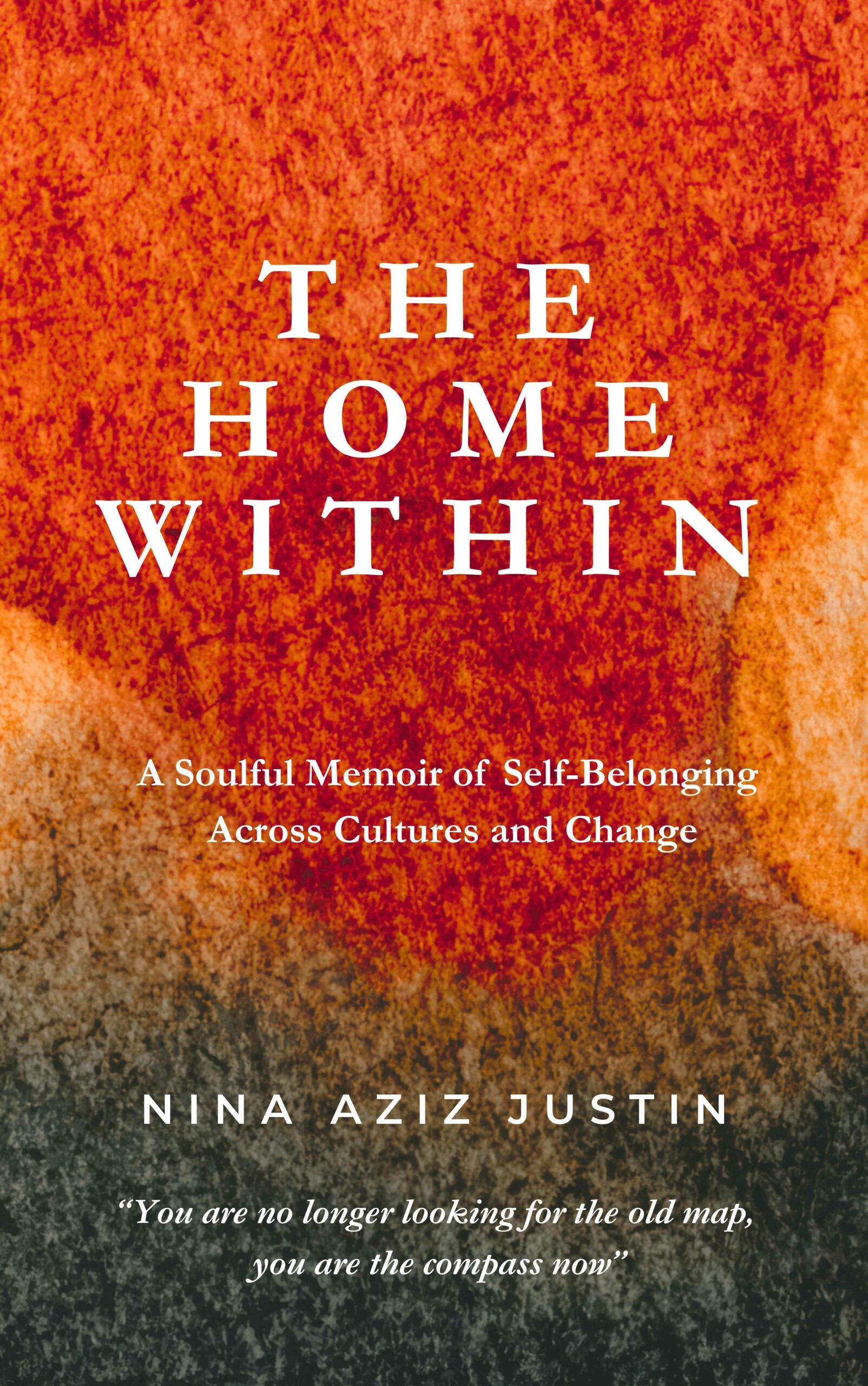
© 2026 Nina Aziz Justin. All rights reserved. This article is the original intellectual property of the author. Nina Aziz Justin is a writer, business traction strategist, and internationally recognised resilience mentor whose life spans five countries and more than forty cultures. She weaves philosophy, neuroscience and human storytelling into work that explores migration, identity and belonging. For more information visit www.theresiliencementor.com. Her debut book, The
Home Within – A Soulful Memoir of Belonging Across Cultures and Change, is available worldwide.
 House of Peregrine